Introduction
how to clean dog ears at home safely ears at home is safe only when done gently, occasionally, and with the right method. Using the wrong products or cleaning too often can irritate the ear canal and actually cause infections instead of preventing them.
Many dog owners clean ears with the best intentions — to stop odor, wax, or itching. What’s rarely explained is that a dog’s ear is designed to protect itself. Interfering too much disrupts that balance. This guide explains when ear cleaning is helpful, when it becomes harmful, and exactly how to clean your dog’s ears at home without causing pain, stress, or long-term problems.
Why Dog Ear Cleaning Is More Delicate Than People Think
A dog’s ear canal is deeper and more curved than a human’s. That design traps moisture easily. When liquid sits inside the ear, it creates the perfect environment for yeast and bacteria.
From real experience, many chronic ear infections don’t start from neglect — they start from over-cleaning.
Cleaning should support the ear’s natural defenses, not strip them away.
When Cleaning Your Dog’s Ears Is a Good Idea
Ear cleaning is appropriate when you notice:
Visible wax buildup
Mild odor (not foul)
Dirt after swimming or bathing
Vet-recommended maintenance for specific breeds
Do NOT clean if you see:
Redness or swelling
Thick discharge (yellow, green, black)
Pain when touched
Constant head shaking
Expert Warning
Cleaning an already inflamed ear pushes debris deeper and delays healing. If pain or discharge is present, stop immediately and seek veterinary advice.
Supplies You Should Use (and What to Avoid)
Safe Supplies
Vet-approved dog ear cleaner
Cotton balls or soft gauze
Towel (ear shaking is guaranteed)
Unsafe Items (Never Use)
Cotton swabs (Q-tips)
Hydrogen peroxide
Vinegar or alcohol
Homemade internet mixtures
Why cotton swabs are dangerous (SERP gap)
They compact wax deeper into the canal and can damage delicate tissue — something many top articles mention briefly but don’t explain clearly.
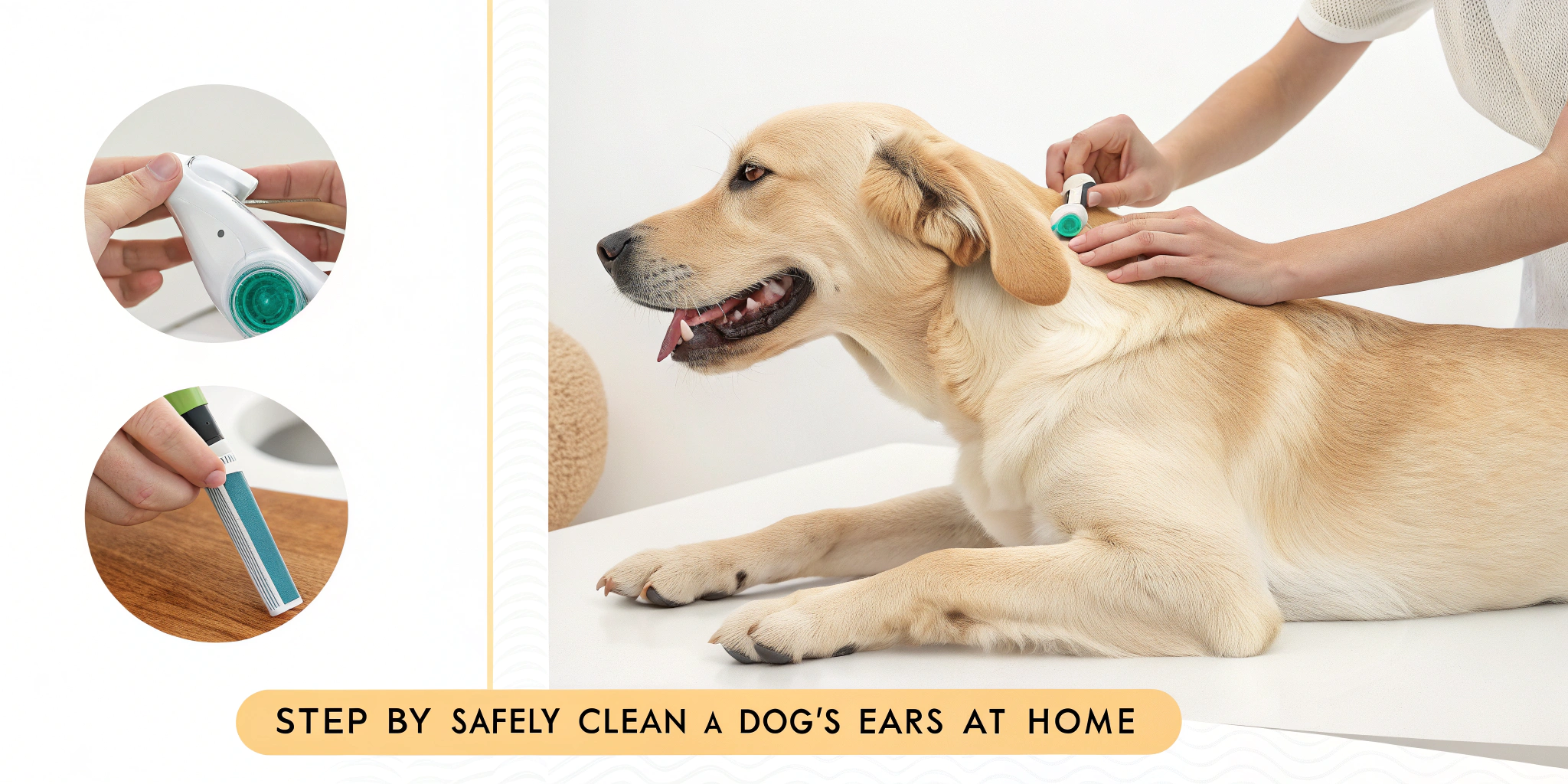
Step-by-Step: How to Clean Dog Ears at Home Safely
Choose the right moment
Pick a calm time — not after exercise or excitement.
Inspect before cleaning
Look and smell first. If it looks painful, don’t proceed.
Apply cleaner correctly
Gently fill only the visible opening of the ear canal.
Massage the base of the ear
Do this for 20–30 seconds. You’ll hear a soft squishing sound — normal and expected.
Let your dog shake
This naturally removes loosened debris.
Wipe only what you can see
Never insert anything into the canal.
Pro-Tip
From practical experience, fewer cleanings done correctly prevent more infections than frequent “just in case” cleaning.
Common Dog Ear Cleaning Mistakes (and Fixes)
| Mistake | Why It Causes Problems | Safer Fix |
| Cleaning weekly by routine | Removes protective oils | Clean only when needed |
| Using strong liquids | Burns sensitive skin | Use ear-specific cleaners |
| Cleaning during infection | Traps moisture | Treat infection first |
| Going deep into ear | Causes micro-injuries | Wipe visible areas only |
Information Gain: Why Some Dogs Need Less Ear Cleaning
Most SERP articles focus on breed, but lifestyle matters more.
Dogs that:
Have upright ears
Live in dry climates
Swim rarely
…often need very little ear cleaning.
Meanwhile, floppy ears + moisture + poor airflow increase cleaning needs. The key factor isn’t the breed — it’s ventilation and moisture exposure, a nuance often missing from top results.
UNIQUE SECTION — Practical Insight From Experience
Veterinarians can often identify over-cleaned ears instantly. They appear unnaturally pink, shiny, and sensitive — not dirty. Ironically, dogs with “very clean” ears often develop infections faster than dogs with mild, healthy wax.
Clean doesn’t mean healthy.
Balanced does.
When You Should Stop Home Cleaning and Call a Vet
Stop cleaning and seek help if you notice:
Persistent odor
Thick or colored discharge
Pain or yelping
Head tilt
Swelling
Money-Saving Recommendation
Early vet visits for ear irritation cost far less than treating chronic infections caused by delayed or improper home care.
YouTube (Contextual Learning)
“How to Clean Dog Ears – Veterinarian Demonstration”
“Dog Ear Infections: What Owners Get Wrong”
(Embed videos naturally under the step-by-step section.)
FAQs
Q1. How often should I clean my dog’s ears?
Only when visible buildup or odor appears — not on a fixed schedule.
Q2. Can I use hydrogen peroxide on dog ears?
No. It irritates tissue and increases infection risk.
Q3. Is head shaking after cleaning normal?
Yes, briefly. Ongoing shaking means irritation.
Q4. Do floppy-eared dogs need more cleaning?
Sometimes — but airflow and moisture matter more than ear shape.
Q5. Can ear cleaning prevent infections?
Proper cleaning can help, but over-cleaning causes infections.
Internal Linking Plan (Contextual)
safe ear-cleaning steps → Dog Ear Infection Home Treatment
early ear irritation signs → Reverse Sneezing vs Coughing in Dogs
External Authority References
Veterinary dermatology guidelines
AKC ear care resources
Licensed veterinary education articles
Conclusion
Cleaning your dog’s ears at home can be helpful — or harmful — depending on restraint and technique. The safest approach is minimal interference, proper tools, and knowing when to stop. When in doubt, protecting the ear’s natural balance is always better than aggressive cleaning