
Introduction
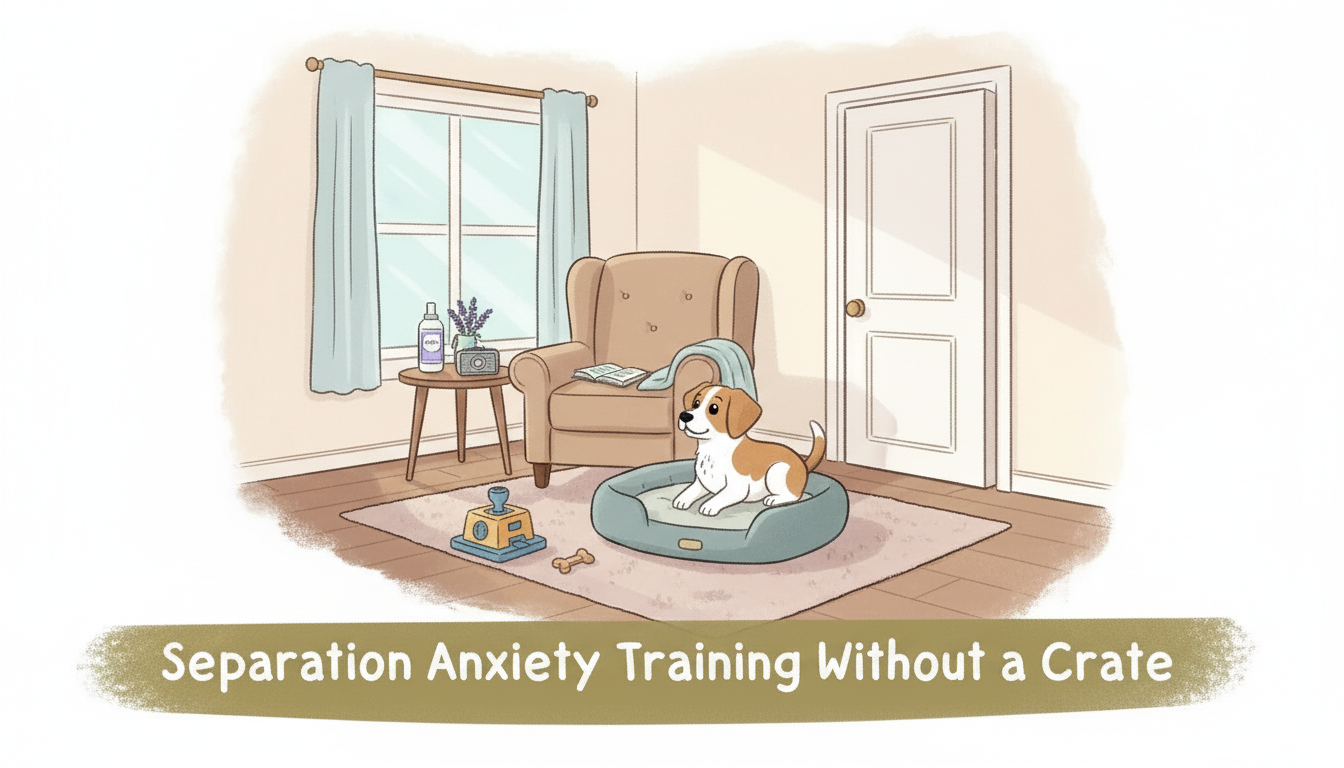
Separation anxiety training without a crate focuses on gradual independence, predictable routines, and reducing emotional spikes, not confinement. For many dogs, crates increase panic instead of providing comfort.
Crates can be helpful tools, but they are not a universal solution. Some dogs feel trapped when confined, especially those with true separation anxiety rather than simple boredom. This guide explains how to reduce separation anxiety without using a crate, why certain dogs respond poorly to confinement, and what calm, practical strategies actually help dogs feel safe when left alone.
Why Crates Can Make Separation Anxiety Worse
For anxious dogs, confinement removes their ability to cope.
Instead of feeling secure, these dogs may:
Panic when movement is restricted
Vocalize or attempt escape
Associate the crate with owner departure
Experience heightened stress responses
From real-world behavior cases, dogs with separation anxiety often need freedom paired with structure, not physical restriction.
Expert Warning
For dogs that panic in crates, forcing confinement can worsen anxiety and lead to injury or long-term fear associations.
What Separation Anxiety Really Looks Like (Not Just Misbehavior)
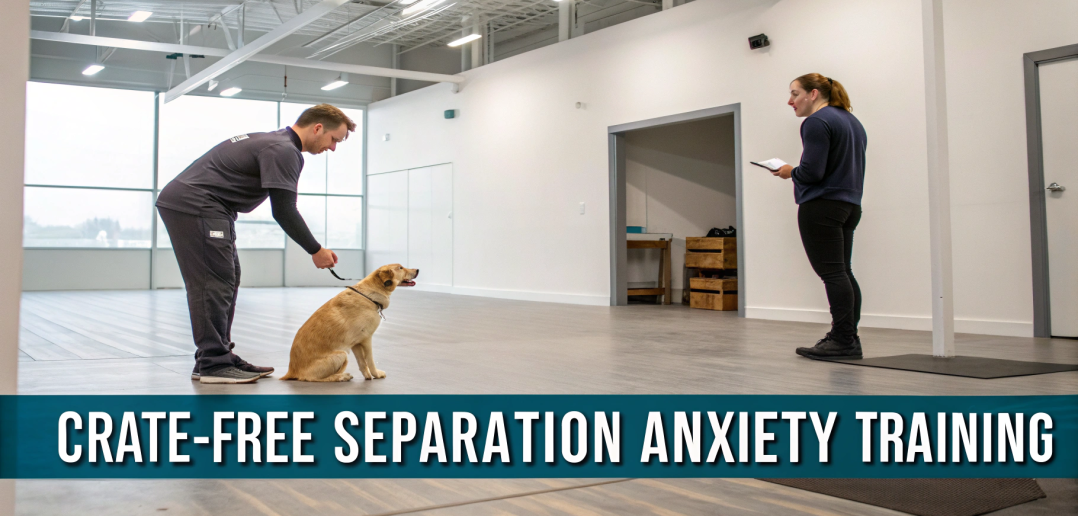
True separation anxiety is emotional distress — not disobedience.
Common signs include:
Distress vocalization shortly after departure
Destructive behavior near exits
Excessive drooling or pacing
Panic that doesn’t fade with time
This differs from boredom-based behavior, which usually settles once the dog adjusts.
Crate-Free Training Foundations That Work
- Build Predictable Departure Patterns
Dogs feel safer when they can predict events. Random, emotional exits increase anxiety.
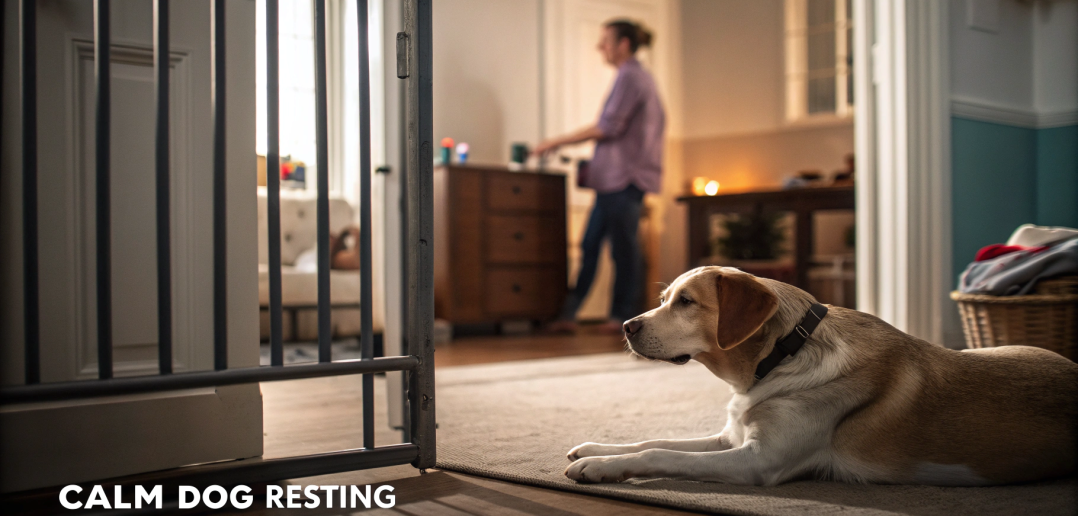
- Create a “Safe Freedom Zone”
Use a dog-proofed room or gated area instead of a crate.
- Practice Absence in Seconds, Not Hours
Start with very short departures and build gradually.
Pro-Tip
From real training experience, progress measured in seconds early on leads to faster long-term improvement than long trial absences.
Step-by-Step: Crate-Free Separation Training Flow
Calm pre-departure routine
Neutral exit (no emotional cues)
Short absence (5–30 seconds)
Calm return (no excitement)
Repeat daily, slowly extending time
Consistency matters more than speed.
Common Crate-Free Training Mistakes (And Fixes)
| Mistake | Why It Fails | Better Alternative |
| Leaving for too long too soon | Triggers panic | Build duration slowly |
| Emotional goodbyes | Reinforces fear | Neutral departures |
| Overusing food puzzles | Masks anxiety | Pair with calm training |
| Inconsistent routines | Increases uncertainty | Predictable schedule |
Information Gain: Freedom Reduces Panic for Some Dogs
A major SERP gap: many guides assume confinement is calming.
In practice, dogs with separation anxiety often panic because they lose control over their environment. Allowing limited, safe movement reduces panic by:
Lowering frustration
Allowing self-soothing behaviors
Removing “trapped” sensations
Freedom alone isn’t the solution — structured freedom is.
UNIQUE SECTION — Practical Insight From Experience
In real cases, dogs that destroy crates often settle when given a gated living room with familiar smells and background noise. The anxiety wasn’t about being alone — it was about being confined while alone.
When Crate-Free Training Is Not Enough
Seek professional help if:
Panic escalates despite gradual training
Self-injury occurs
Anxiety worsens with practice
Dog cannot tolerate seconds alone
Money-Saving Recommendation
Early behavior intervention prevents costly damage and long-term anxiety treatment.
YouTube (Contextual Learning)
“Separation Anxiety in Dogs Without Crates”
“Desensitization Training for Separation Anxiety”
(Embed after the training flow section.)
FAQs
Q1. Can dogs overcome separation anxiety without a crate?
Yes. Many dogs improve faster with crate-free approaches.
Q2. Should I let my dog roam freely when alone?
Only in a safe, limited area — not full unsupervised access.
Q3. Does getting another dog fix separation anxiety?
Usually no. Anxiety is about attachment to people.
Q4. How long does crate-free training take?
Weeks to months, depending on severity and consistency.
Q5. Is medication ever necessary?
Sometimes, alongside training, under veterinary guidance.
Internal Linking Plan (Contextual)
calm departure routines → How to Stop Puppy Biting Without Yelling
impulse control skills → Teach Your Dog to Settle on a Mat
External Authority References
Veterinary behavior specialists
Certified separation anxiety trainer resources
Canine behavior research publications
Conclusion
Separation anxiety training without a crate isn’t about removing structure — it’s about replacing confinement with calm predictability. For dogs that panic when confined, structured freedom paired with gradual training can transform alone time from distress into safety.


