Introduction
human foods dogs can and can’t eat some human foods safely in moderation, but others are toxic even in small amounts. Knowing the difference — and proper portion sizes — prevents accidental poisoning and long-term health issues.
Sharing food is one of the most common ways owners bond with dogs. Unfortunately, it’s also one of the easiest ways to cause harm without realizing it. Many foods that are safe for humans affect dogs very differently. This guide breaks down which human foods are safe, which are dangerous, and how to make smart decisions without memorizing endless lists.
Why Dogs React Differently to Human Foods
Dogs metabolize food differently than humans.
Key differences include:
Slower toxin processing
Smaller body size relative to dose
Different enzyme activity
Greater sensitivity to certain compounds
From real-world feeding experience, most food-related emergencies happen due to portion size, not intentional feeding of toxic foods.
Expert Warning
A food that’s “mostly safe” can still be dangerous if fed too often or in large amounts.
Human Foods Dogs Can Eat (Safely)
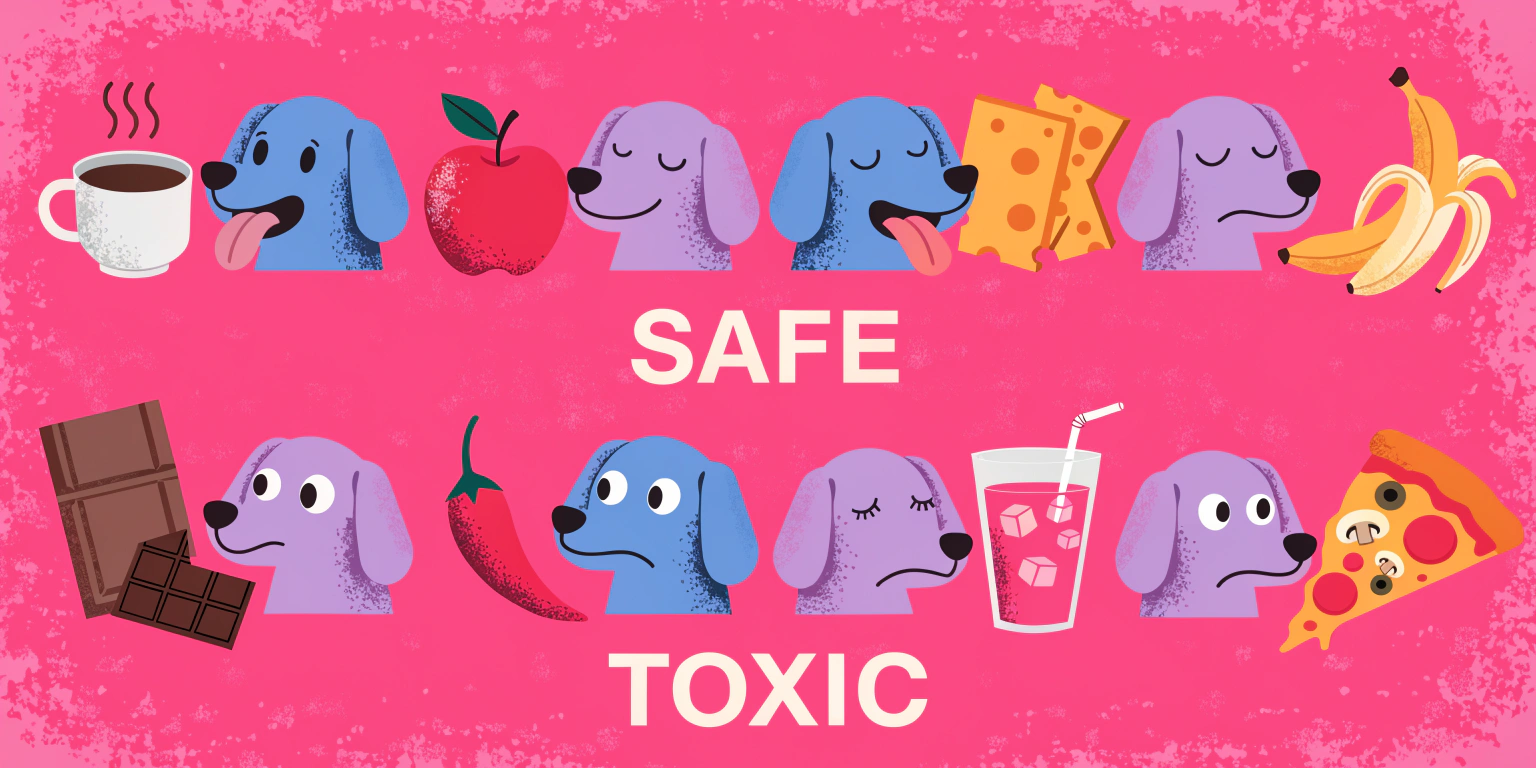
These foods are generally safe when plain and unseasoned:
| Food | Why It’s Safe | Feeding Notes |
| Cooked chicken | Lean protein | No skin or seasoning |
| Rice | Easy to digest | Plain only |
| Carrots | Low calorie | Raw or cooked |
| Apples | Fiber & vitamins | No seeds |
| Eggs (cooked) | High-quality protein | Moderation |
| Peanut butter | Healthy fats | Xylitol-free only |
This table simplifies what many SERP pages overcomplicate.
Human Foods Dogs Must NEVER Eat
Some foods are toxic even in small quantities.
| Toxic Food | Why It’s Dangerous |
| Chocolate | Theobromine toxicity |
| Grapes & raisins | Kidney failure risk |
| Onions & garlic | Red blood cell damage |
| Xylitol | Rapid hypoglycemia |
| Alcohol | Central nervous system depression |
| Macadamia nuts | Neurological symptoms |
Information Gain
Many poisonings occur from accidental exposure — dropped food, gum, baked goods — not deliberate feeding.
Foods That Are “Sometimes Safe” (SERP Gap Explained)
A major SERP blind spot: gray-area foods.
These aren’t toxic, but can cause problems if overfed:
Cheese (fat & lactose)
Bread (empty calories)
Yogurt (lactose sensitivity)
Bacon (fat & salt)
Popcorn (kernels & butter)
Safety depends on amount, frequency, and dog size — not just the food itself.
Information Gain: Portion Size Matters More Than Food Type
A key insight missing from many guides:
Dose makes the danger.
A large dog tolerates small amounts better than a small dog, but repeated “safe treats” can still lead to:
Obesity
Pancreatitis
Digestive upset
Nutrient imbalance
Moderation protects more dogs than restriction alone.
Common Owner Mistakes With Human Food
| Mistake | Why It’s Risky | Better Choice |
| Feeding table scraps | Hidden seasonings | Plain alternatives |
| Assuming “natural” = safe | Toxic plants exist | Verify first |
| Sharing daily | Weight gain | Treat as occasional |
| Ignoring ingredient labels | Hidden xylitol | Read every label |
Money-Saving Recommendation
Preventing food-related illness is far cheaper than emergency vet visits for poisoning or pancreatitis.
UNIQUE SECTION — Practical Insight From Experience
In real cases, dogs rarely get sick from one unsafe food — they get sick from habitual sharing. The dog that “handles food well” for months often ends up with pancreatitis after one rich meal. Consistency matters more than luck.
What to Do If Your Dog Eats Something Unsafe
Remove access immediately
Check ingredients and amount eaten
Call your vet or pet poison hotline
Do not induce vomiting unless instructed
Time matters — early action saves lives.
FAQs
Q1. Can dogs eat human food every day?
No. Human food should be occasional, not daily.
Q2. Are fruits safe for dogs?
Some are, but seeds and portions matter.
Q3. Is peanut butter safe for dogs?
Yes, only if it’s xylitol-free.
Q4. What human food is most dangerous for dogs?
Xylitol and chocolate cause the most emergencies.
Q5. Should I give my dog table scraps?
No. Plain, dog-safe foods are a better option.
Internal Linking Plan (Contextual)
digestive upset prevention → Dog Probiotics for Diarrhea
portion control guidance → How Much to Feed a Puppy
External Authority References
Veterinary toxicology guidelines
Pet poison control resources
Canine nutrition safety publications
Conclusion
Human food isn’t automatically bad for dogs — but knowledge and moderation are essential. By understanding which foods are safe, which are toxic, and how portion size changes everything, owners can share safely without risking their dog’s health.